
Article: The Ultimate Guide to Cat Collars: Safety, Style & Sizing for Indian Cats

The Ultimate Guide to Cat Collars: Safety, Style & Sizing for Indian Cats
Does Your Cat Actually Need a Collar?
Short answer: yes — and not just for looks. A collar with an ID tag is one of the simplest, most effective ways to help your cat find their way home if they ever get lost. For indoor-outdoor cats in India, where strays are common and neighbourhoods can be confusing, a collar is a quiet but powerful safety tool.
But not all collars are created equal. Here's everything you need to know to choose the right one.
Safety First: Why Breakaway Collars Matter
A breakaway collar (also called a safety collar) is designed to snap open under pressure — so if your cat's collar gets caught on a branch, fence, or furniture, it releases before your cat gets hurt. This is especially important for:
- Cats who go outdoors or onto balconies
- Kittens who are still learning to navigate their environment
- Cats who are particularly curious or adventurous
We strongly recommend breakaway collars for all cats. A collar that won't release in an emergency is a safety risk, not a safety net.
How to Measure Your Cat for a Collar
Getting the fit right is crucial — too tight and it's uncomfortable, too loose and it can slip off or get caught.
- Use a soft measuring tape (or a piece of string) to measure around the base of your cat's neck
- Add two fingers' width of space — this is your target fit
- Most adult cats fall between 20–35 cm; kittens need smaller sizes
- Check the fit regularly, especially for growing kittens
Collar Materials: What Works Best in India
India's climate — especially humidity and heat — affects how comfortable a collar feels on your cat's skin:
Nylon
Lightweight, durable, and easy to clean. Holds up well in humid conditions. A great everyday choice.
Soft Fabric / Cotton
Gentle on skin, especially for cats with sensitive necks. Can absorb moisture, so needs more frequent washing in monsoon season.
Leather
Durable and stylish, but can stiffen in heat and may not suit cats with skin sensitivities. Better for occasional wear.
Should You Add an ID Tag?
Absolutely. An ID tag with your phone number is the fastest way for someone to return your cat if they wander. Keep it simple: your name, your cat's name, and a contact number. Avoid heavy tags that dangle and clank — lightweight engraved tags are quieter and more comfortable.
What About Bells?
Bells on collars are a personal choice. They can alert birds and small animals to your cat's presence (helpful if you want to protect local wildlife), but some cats find the constant sound stressful. Watch your cat's behaviour — if they seem agitated or keep pawing at the collar, a bell-free option may be kinder.
How Often Should You Replace a Collar?
Check your cat's collar every few weeks for signs of wear — fraying, stretched elastic, or a buckle that doesn't click firmly. Replace it if:
- The breakaway mechanism feels loose or stiff
- The fabric is visibly worn or smells despite washing
- Your cat has grown and the fit has changed
Shop Cat Collars
Our cat collars are designed with both safety and style in mind — soft, adjustable, and built for Indian cats and Indian climates.
👉 Shop All Premium Cat Essentials
Complete Your Cat's Setup
A collar is just the start. Pair it with the right feeding setup and a cosy resting spot:
👉 Whisker Friendly Cat Bowls & Feeding Mats
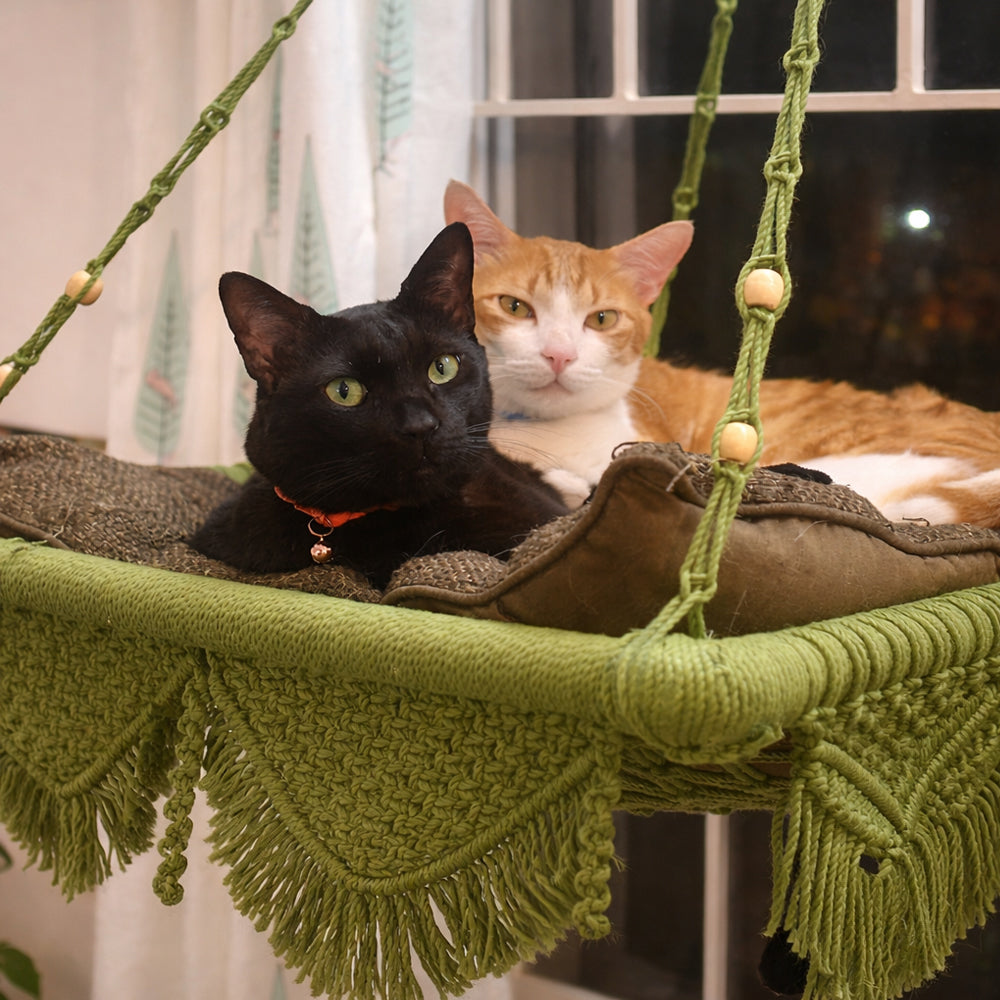
👉 Handmade Hammocks for Cats
Soulpurrpose is built on love for cats — inspired by Neo, Bob, and Mia, and designed for every cat parent who wants the best for their companion.
Written by Soulpurrpose .
Varsha Saxena, Founder of Soulpurrpose
Leave a comment
This site is protected by hCaptcha and the hCaptcha Privacy Policy and Terms of Service apply.